
Imagination and the Real World
Anne of the IslandThis flow traces how Anne’s imagination both enriches her life and sometimes misleads her until experience teaches her to revise it.
increasing Bearing strength in each event
 decreasing
Bearing strength in each eventdecreasingDreaming Beyond the Brook
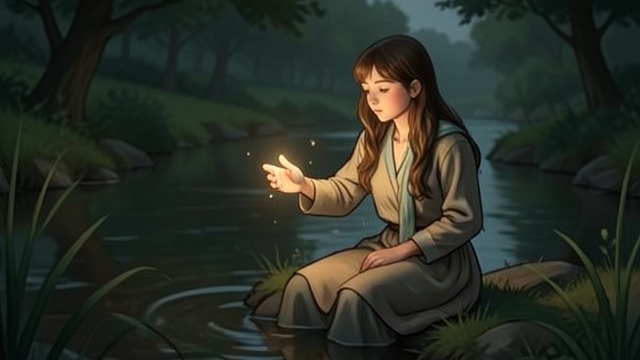
Dreaming Beyond the Brook
Imagination as refuge
Anne sits by the brook and imagines faraway lands and the land of Heart’s Desire. Her inner world gives her a kind of richness that daily circumstances cannot provide.
The dreams allow her to release the immediate anxieties of departure and romance. They are not a denial of reality so much as a way to live imaginatively within it.
A gift with limits
Anne knows that what is unseen can feel permanent even as visible things pass away. Her imagination will continue to sustain her, but it will also need to meet the claims of real people.
The Hero in the Rain

The Hero in the Rain
A fantasy takes form
Anne meets Royal Gardner during a sudden shower and sees in him the handsome, eloquent hero of her dreams. His appearance seems to confirm that the world can arrange itself like a romance.
She delights in his flowers and compliments, but reads them through an ideal she formed before she knew him well. The imagined hero arrives before the test of everyday compatibility.
Reality’s delayed question
Anne’s attraction is genuine, yet it is partly supported by the resemblance between Roy and her private image. The novel asks whether a beautiful story can substitute for a durable bond.
The Story That Would Not Behave
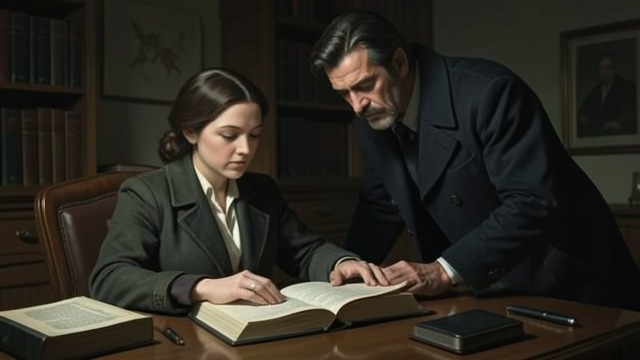
The Story That Would Not Behave
Fiction resists control
Anne finds that her characters in Averil’s Atonement do not always act as she intended. She tries to force the plot toward the romantic and tragic shape she has designed.
Mr. Harrison’s criticism challenges the story’s ornate language and one-dimensional characters. Anne resists the suggestion that a villain might have some decency, because it disrupts her preferred plot.
Writing meets experience
Anne’s literary effort shows that imagination is powerful but not automatically true to life. Learning to write will require her to observe people rather than simply arrange them.
Paul’s Lost Rock People
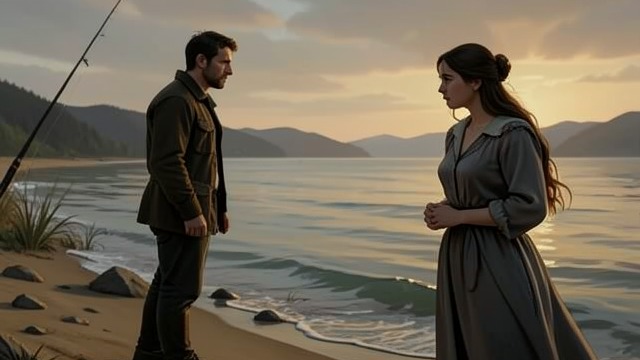
Paul’s Lost Rock People
Imagination changes with age
Paul Irving returns to the shore expecting the Twin Sailors and Golden Lady, but they do not appear. Anne tells him that he has grown too old for their companionship.
The disappointment shows that imaginative worlds can depend on a stage of life. What once felt wholly real may become inaccessible without having been meaningless.
Keeping wonder differently
Paul will move toward adolescence, but his bond with Anne remains. Imagination need not disappear entirely; it changes form as its owner changes.
A More Grounded Writer
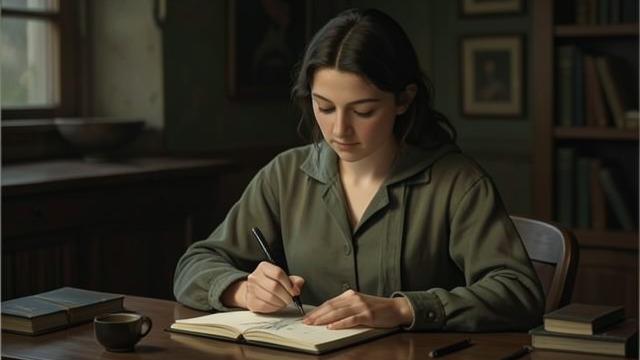
A More Grounded Writer
Returning to a small sketch
Anne rereads a simple early sketch and chooses to revise it rather than another elaborate romance. The decision follows a period of rejection and embarrassment over the commercial alteration of her earlier story.
The sketch is accepted by the Youth’s Friend. Its success suggests that careful observation and a modest subject can carry more truth than decorative grandeur.
Imagination disciplined
Anne does not abandon invention; she learns to anchor it in life. Her developing literary voice can still be lyrical while allowing characters and places to remain human.
A moonlit night before Anne leaves Avonlea
A November afternoon in Kingsport
Anne’s summer writing at Green Gables
Paul’s return to the shore at thirteen
Anne’s final year at Redmond
